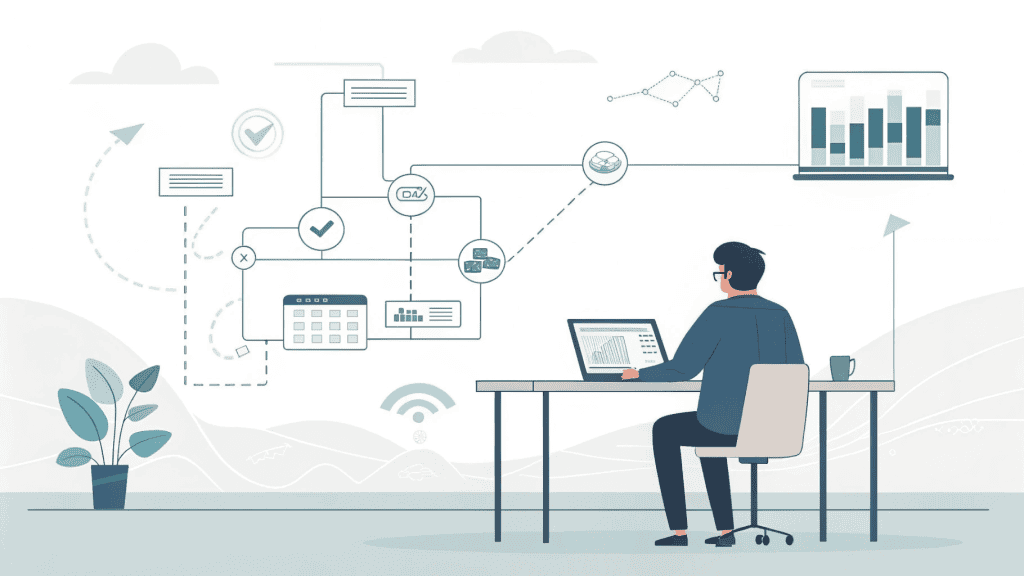
In 2026, soloentrepreneurship looks very different than it did even a few years ago. The tools are more powerful, customers are more informed, and competition is global by default. Yet many solo founders are still trying to grow digital sales by stacking tools, adding channels, and working longer hours.
The problem isn’t effort. It’s the lack of a soloentrepreneur operating system—a clear, integrated way to run digital sales, delivery, and growth without adding headcount.
This article breaks down what a modern operating system for solo businesses actually looks like, why it matters now, and how to build one that scales revenue without scaling complexity.
Why Scaling as a Soloentrepreneur Is Harder in 2026
Solo founders today face a paradox:
You have more tools than ever, yet growth often feels slower and more fragile.
Common friction points include:
- Too many disconnected tools managing leads, sales, and delivery
- Manual follow-ups and inconsistent customer journeys
- Revenue tied directly to your availability
- Marketing activity without a clear conversion system
Digital commerce in 2026 rewards leverage, not busyness. Soloentrepreneurs who scale are not doing more—they are operating differently.
That shift starts with systems.
What Is a Soloentrepreneur Operating System?
A soloentrepreneur operating system is not software. It’s a structured way of running your business that aligns strategy, sales, automation, and decision-making into a single, repeatable model.
Think of it as:
- How demand is generated
- How leads convert into revenue
- How delivery happens with minimal friction
- How insights feed back into growth decisions
For solo founders, the operating system must meet three criteria:
- Simple enough to manage alone
- Automated wherever possible
- Flexible enough to evolve with the market
The 5 Core Layers of a Scalable Solo OS
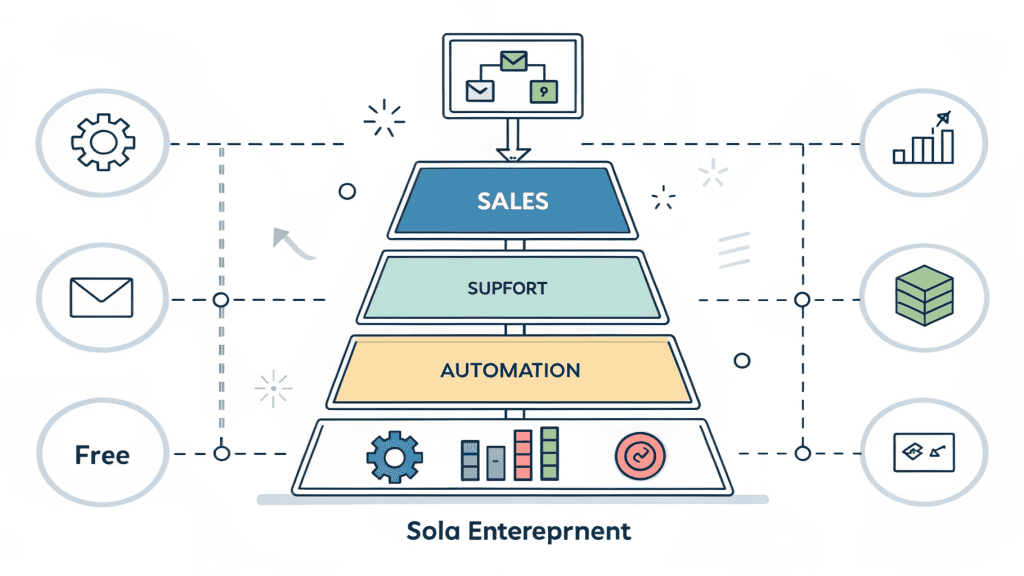
1. Strategic Clarity (The Non-Negotiable Foundation)
Most solo businesses struggle not because of execution, but because of unclear positioning.
Before touching tools or automation, you need:
- A clearly defined ideal customer
- A narrow, high-value problem you solve
- A small set of core offers tied to outcomes
Example:
A solo digital consultant reduced burnout by moving from “custom services” to one primary diagnostic offer, one implementation offer, and one ongoing advisory. Revenue increased, while workload decreased.
Clarity simplifies everything downstream.
2. Digital Sales Systems That Run Without You
In 2026, digital sales systems are about predictability, not volume.
A solid system includes:
- One primary acquisition channel
- One conversion pathway
- One clear next step for buyers
Instead of:
- Multiple funnels
- Endless landing pages
- Constant launching
Focus on:
- A single, well-optimized sales page
- Automated lead qualification
- Scheduled, time-boxed sales conversations (when needed)
This allows you to sell consistently without being “on” all the time.
3. Automation for Small Digital Brands
Automation is the backbone of scalability for solo businesses—but only when applied strategically.
High-impact automation areas:
- Lead capture and tagging
- Email follow-ups and onboarding
- Payment, access, and delivery workflows
- Customer check-ins and feedback loops
Low-impact automation:
- Overly complex funnels
- Tool-heavy stacks without clear ROI
- Automating broken processes
Rule of thumb:
Automate what already works manually—don’t automate confusion.
4. AI for Solo Entrepreneurs (Used Responsibly)
AI is no longer optional in digital commerce strategy 2026. But it should support thinking, not replace it.
Effective AI use cases for solo founders:
- Drafting sales emails and follow-ups
- Content outlines and ideation
- Customer insight analysis
- Internal documentation and SOPs
Poor AI use:
- Publishing unedited content
- Replacing strategy with prompts
- Using AI as a shortcut for clarity
The soloentrepreneurs who win use AI as a force multiplier, not a crutch.
5. Feedback Loops That Guide Growth
Without feedback, systems stagnate.
Your operating system should include:
- Simple KPI tracking (conversion rate, revenue per offer, lead source quality)
- Monthly system reviews
- Customer feedback tied to offer evolution
Example:
A solo course creator noticed most churn occurred within 30 days. By adding an automated onboarding sequence and a single live check-in, retention improved without increasing workload.
Small system adjustments compound quickly.
What Scaling a Solo Business Actually Looks Like
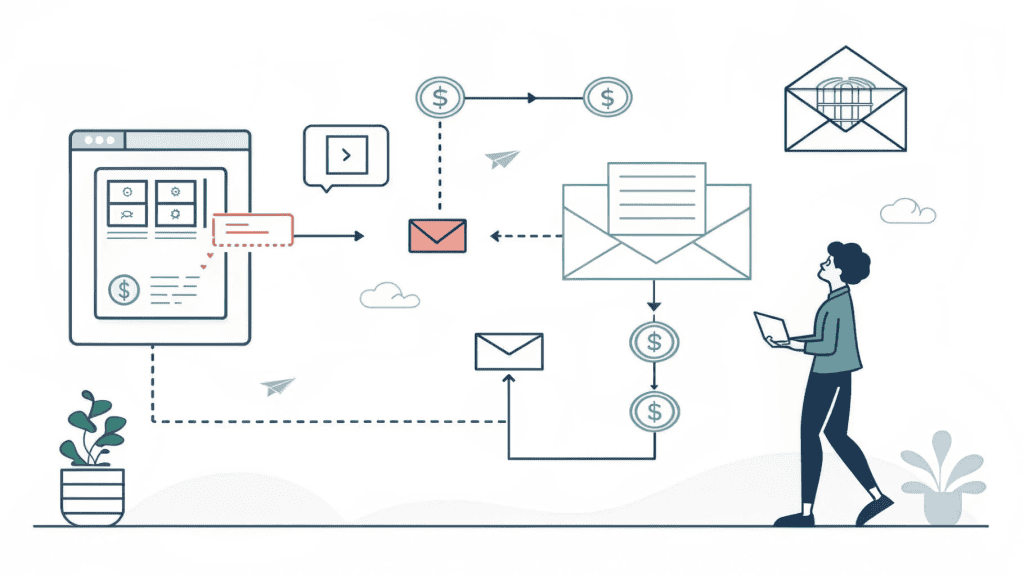
Scaling doesn’t mean:
- More platforms
- More offers
- More hours
It means:
- Fewer decisions repeated manually
- Clear boundaries between work and growth
- Revenue not tied to daily effort
Well-designed digital sales systems create:
- Predictable income
- Reduced cognitive load
- Space for strategic thinking
This is what real scale looks like for solo founders.
Common Mistakes That Break Solo Operating Systems
Even experienced founders fall into these traps:
- Building systems before clarifying strategy
- Copying team-based business models
- Adding tools instead of removing friction
- Measuring activity instead of outcomes
Your operating system should make the business lighter, not heavier.
A Practical Starting Point for January 2026
If you’re starting now, focus on three actions:
- Audit your current sales flow end-to-end
- Identify one process to simplify or automate
- Remove one tool that isn’t earning its place
Momentum comes from subtraction as much as addition.
Final Thought: Systems Create Freedom
In 2026, the most successful soloentrepreneurs are not the busiest. They are the ones who designed businesses that work with them, not against them.
A strong soloentrepreneur operating system turns digital commerce from a grind into a repeatable engine for growth.
 English
A really good blog and me back again.